My Favorite Teacher: A Designer’s Stitch Review
As a designer who has spent countless hours staring at digitized previews and even more hours watching needles punch through fabric, I have learned to be skeptical of cute concepts. We all know that what looks adorable on a screen does not always translate cleanly to cloth. When I first loaded the My Favorite Teacher embroidery design into my software, I was looking for more than just charm. I was looking for structural integrity, stitch flow, and commercial viability. This is not just a graphic; it is a blueprint for a finished product, and in the world of School-themed Embroidery, clarity is king.
First Impressions and Visual Personality
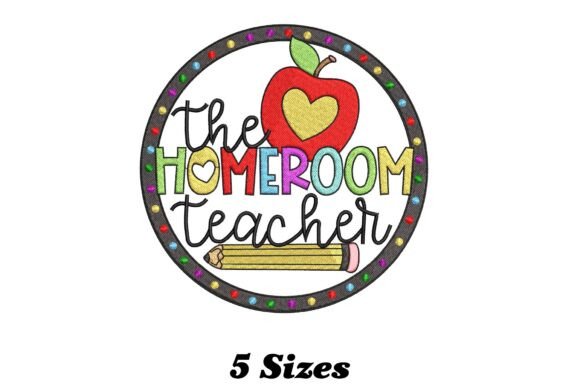
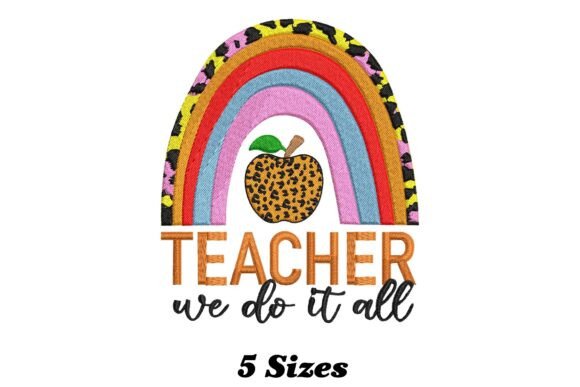
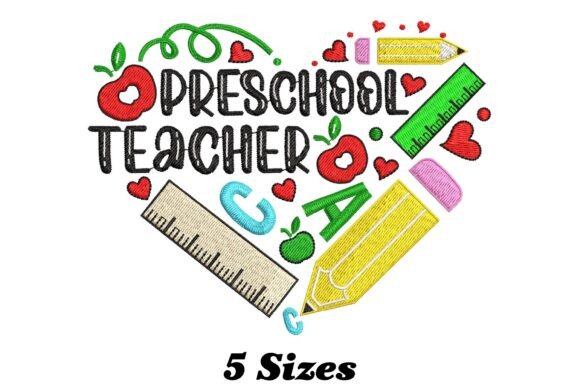
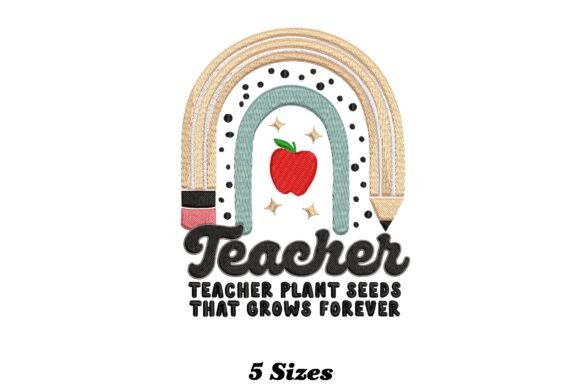
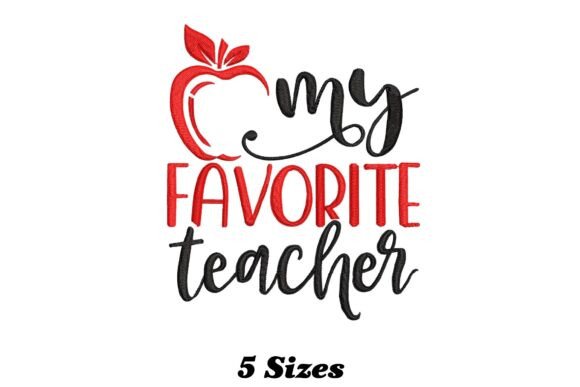
The immediate mood of this design is playful and whimsical, exactly as described. It avoids the stiff, corporate look that plagues many educational motifs. Instead, it leans into a hand-drawn aesthetic that feels approachable and warm. For a designer, this is crucial. When you are creating a personalized gift or a custom apparel item, the client is buying an emotion, not just a logo. The layout suggests a balance between detail and simplicity. It does not scream for attention with excessive complexity, which is a good sign for stitch-out reliability.
I appreciate that the visual personality feels modern yet timeless. It does not rely on trendy fonts that will look dated in two years. This makes it a versatile asset for any craft business owner building a library of evergreen designs. Whether you are an Etsy seller preparing for back-to-school season or a boutique owner creating year-round teacher appreciation gifts, the aesthetic fits seamlessly into current market trends without feeling forced.
Real-World Application: The Tote Bag Test
To truly evaluate a machine embroidery design, you have to imagine it in situ. I envisioned this design stitched onto a heavy canvas tote bag, a popular item for teachers carrying books and supplies. The scale of the design appeared appropriate for a standard hoop, sitting comfortably in the center of the bag without overwhelming the fabric. The whimsical touch mentioned in the description holds up here; it softens the utilitarian nature of the tote, turning a basic accessory into a statement piece.
Beyond tote bags, I see strong potential for sweatshirt embroidery. A left-chest placement on a heather grey crewneck would look professional yet personal. The design’s charm adds a dash of personality to what is often a plain garment. For baby embroidery projects, such as a onesie or a burp cloth, the design would need to be scaled down significantly. Here, the simplicity of the lines becomes an advantage. Complex details get lost at small sizes, but a clean, whimsical motif retains its readability even when shrunk for tiny garments.
Versatility Across Product Lines
- Custom Apparel: Works well on t-shirts and polos for school staff or PTA events.
- Home Decor: Ideal for pillow covers or kitchen towels, adding a playful touch to domestic spaces.
- Accessories: Suitable for caps and hats, provided the curvature of the cap is accounted for during hooping.
- Patches: Can be stitched out as an embroidered patch for iron-on application, increasing its utility for uniforms or jackets.
Technical Considerations for the Serious Maker
While the aesthetic is appealing, the technical execution is where a design lives or dies. I always advise checking the stitch density before running a full production batch. If the design relies heavily on fill stitch areas, it may pull on lightweight fabrics. For thin fabric or stretchy material, a cut-away stabilizer is non-negotiable. You do not want your beautiful whimsical design to pucker or distort after the first wash.
Thread color contrast is another critical factor. Since this design likely features multiple elements to create its charming look, ensure your thread colors pop against the background fabric. I recommend testing it on both light and dark fabric backgrounds. On dark fabric, you might need to adjust underlay stitches or use a brighter top thread to maintain visibility. Always inspect small details closely. Tiny lettering or intricate corners can become tangled nests of thread if the digitizing is not precise. Run a test on scrap fabric first. This simple step saves hours of frustration and wasted materials.
Navigating Fabric Textures and Hoop Constraints
Not every fabric is a friend to every design. Textured fabrics like terry cloth towels require careful handling. The loops of the towel can obscure fine details, so ensure the design has bold enough lines to stand out. For curved surfaces like caps, the design must be centered perfectly. Any asymmetry in the digitizing will be glaringly obvious on a rounded surface. If you are using this for an applique design variation, check that the cut edges are clean and that the satin stitch border is dense enough to cover raw edges effectively.
Hoop size is also a limiting factor. Confirm that the design fits within your available hoop dimensions without requiring re-hooping, which introduces alignment errors. If you are working with a small hoop, you may need to resize the design, but be cautious. Resizing too much can distort stitch angles and cause thread breaks. Always review the stitch count and density adjustments if you change the scale significantly.
Commercial Value and Brand Consistency
For small shop products and digital product sellers, the perceived value of the finished product is paramount. A clean, well-stitched design builds customer trust. It signals professionalism. When a buyer receives a holiday embroidery gift or a wedding gift featuring this design, the quality of the stitch-out reflects directly on your brand. Consistency is key. If you use My Favorite Teacher across a range of items, from aprons to blankets, ensure the presentation is uniform. Use high-quality printable mockup images for your online listings to show customers exactly what they can expect.
This design serves as a strong asset for brand consistency. Its playful nature aligns well with brands that focus on joy, education, and creativity. It enhances buyer engagement because it is relatable. Everyone remembers their favorite teacher. By tapping into that nostalgia, you create an emotional connection that drives sales. However, always confirm licensing terms before selling finished items or digital embroidery files. Commercial embroidery rights vary, and protecting your business means knowing exactly what you are allowed to do with each design asset.
Final Designer Notes
- Test First: Never skip the test stitch on scrap fabric similar to your final material.
- Check Contrast: Ensure thread colors stand out against the chosen fabric texture.
- Stabilize Properly: Match the stabilizer to the fabric weight and stretch.
- Verify Licensing: Confirm commercial use rights for your specific business model.
- Mockup Realistically: Use accurate digital previews to set customer expectations.
In conclusion, My Favorite Teacher is a solid addition to any embroidery portfolio. It balances whimsy with wearability, making it suitable for a wide range of applications from casual tote bags to professional apparel. By paying attention to technical details like stitch density and fabric compatibility, you can ensure that every finished product meets the high standards your customers expect. It is a design that invites creativity while respecting the practical limits of machine embroidery.